When Fine Lines Become Structural: A Dermatologist’s Approach to Deep Wrinkles
Over time, certain facial lines begin to behave differently.
They may persist even at rest - along the upper lip, around the eyes, or through the nasolabial folds. What once softened easily with skincare or injectables may appear more etched and less responsive.
When this shift occurs, it often reflects structural change within the dermis rather than simply repetitive movement.
Understanding Structural Collagen Loss
As collagen and elastin gradually decline, the skin’s internal support weakens. The dermis becomes thinner and less resilient. Light reflects differently across the surface. Creases settle more easily into the skin.
At this stage, treatment selection becomes more nuanced.
Dynamic lines may continue to respond well to neuromodulators. Volume-related folds may benefit from filler or biostimulatory therapies. However, when dermal thinning and etched texture play a significant role, simply softening movement or adding volume may not fully address the change.
In these cases, restoring structural integrity and stimulating the skin’s own collagen production may become the more appropriate focus.
The goal is not to “fill” lines, but to improve the quality and strength of the skin itself.
The Resurfacing Spectrum
Laser resurfacing exists on a spectrum of intensity.
When structural collagen loss is significant, erbium laser resurfacing may be considered to stimulate dermal remodeling. Erbium technology allows depth to be calibrated with precision - from fractional treatments that create controlled zones of ablation to more comprehensive resurfacing for advanced structural correction.
This ability to tailor depth is critical. The intensity selected determines both the degree of improvement and the level of recovery required.
More significant structural correction requires meaningful healing time. Planning around lifestyle, professional commitments, and comfort with downtime is an essential part of the decision-making process.
Resurfacing is not appropriate for every patient. It is considered when structural collagen loss plays a meaningful role in visible aging and when the anticipated benefit justifies the recovery involved.
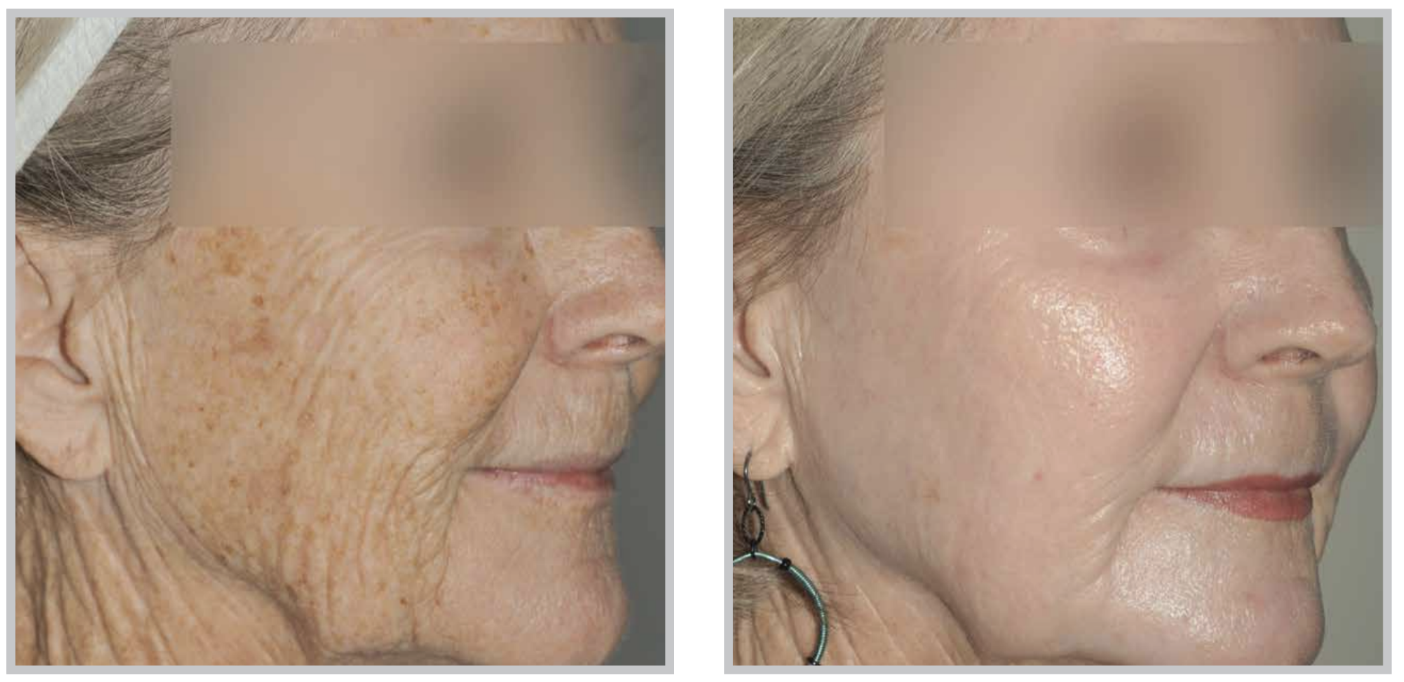
Comprehensive erbium resurfacing for structural perioral lines. 3 months post-treatment. Individual results vary. Treatment selection depends on careful clinical evaluation.
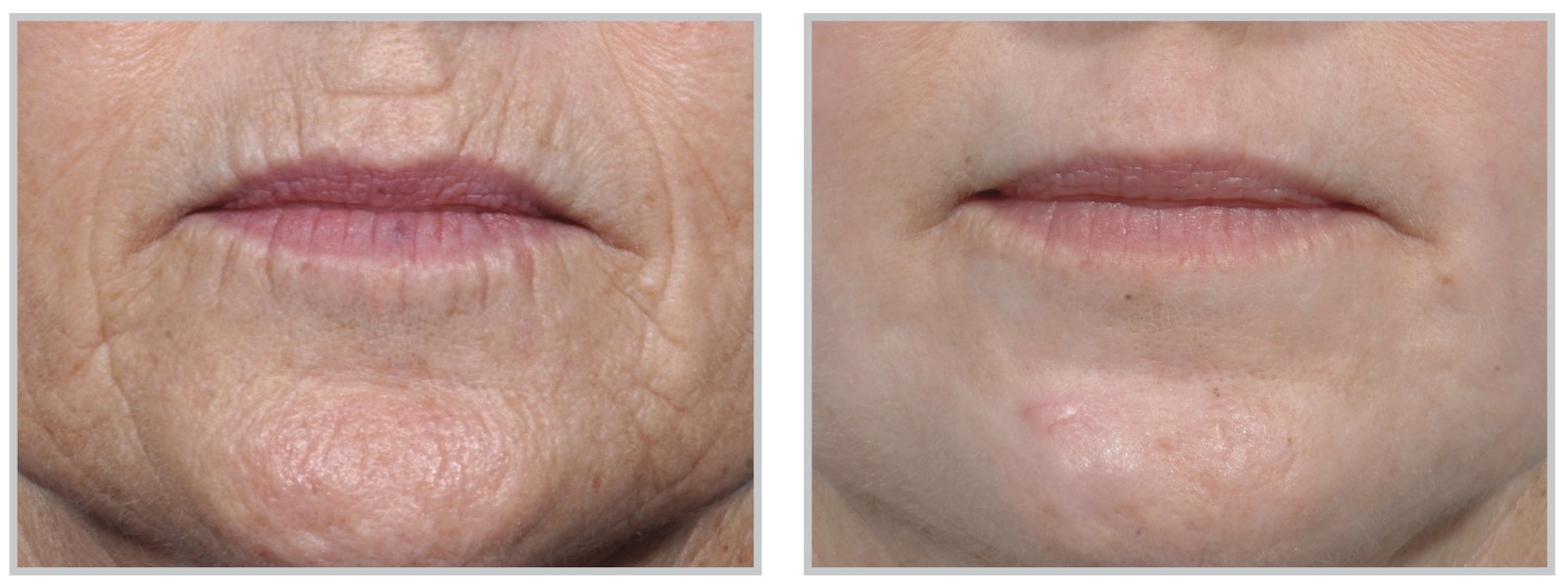
Comprehensive erbium resurfacing for structural perioral lines. 3 months post-treatment. Individual results vary. Treatment selection depends on careful clinical evaluation.
Why Dermatologist-Guided Evaluation Matters
Advanced resurfacing requires careful assessment of:
• Skin thickness and integrity
• Pigment risk
• Individual healing profile and history
• Tolerance for recovery and scheduling considerations
• Long-term aesthetic goals
• Combination treatment planning
Under-treatment may yield limited improvement. Over-treatment may increase risk. Precision and proportionality matter.
A structured consultation ensures that correction is thoughtful, safe, and aligned with long-term skin health.
If certain lines are becoming more etched and less responsive to previous treatments, a comprehensive evaluation can help determine whether resurfacing - or another approach within the treatment hierarchy - is appropriate.
The goal is not to erase expression. It is to restore structural strength and improve the integrity of the skin over time.
Ready to book your consultation at Interior Derm? Click here to contact us today.

Meet Dr. Dianne Burrows, MD, FRCPC
Dr. Burrows is the Medical Director at Interior Dermatology Centre and a leader in dermatology, combining her clinical expertise with a passion for education and research.
As the founder of the Interior Dermatology Centre in Kelowna and a Clinical Instructor at UBC’s Department of Dermatology and Skin Science, she is dedicated to advancing skin health and training the next generation of dermatologists.
Her commitment to innovation extends to conducting clinical trials, keeping her at the forefront of dermatological advancements.