Why Interior Dermatology Chose Erbium Over CO2 for Deep Laser Resurfacing
When patients begin researching deep laser resurfacing, one of the first questions they ask is whether CO2 or erbium is the better choice.
It is a reasonable place to start. Both are ablative lasers, meaning both remove controlled layers of skin to stimulate collagen remodelling and improve concerns such as deep wrinkles, acne scarring, textural change, structural skin changes, and cumulative sun damage. Both have decades of evidence behind them. Both can produce meaningful improvement in appropriately selected patients.
At Interior Dermatology Centre, we use erbium for deep resurfacing not because CO2 is ineffective, but because erbium offers a level of precision and predictability that better aligns with how we believe resurfacing should be performed.
What makes erbium different from CO2?
Both CO2 and erbium are ablative resurfacing lasers. The key difference lies in how much thermal energy is delivered to surrounding tissue during treatment.
CO2 creates more residual thermal effect beyond the treatment zone. That thermal injury can contribute to collagen remodelling, but it also reduces the level of precision with which treatment depth and surrounding tissue effect can be assessed in real time.
Erbium produces less collateral thermal injury. In practice, this allows for cleaner ablation, clearer visualization of tissue response, and more precise control over treatment depth.
For the treating dermatologist, that matters. It means tissue response can be assessed more clearly in real time, and treatment endpoints can be judged with greater confidence.
In deep resurfacing, that distinction has real clinical consequences.
Why Precision Matters in Resurfacing
Resurfacing is not simply about removing as much skin as possible. It is about creating meaningful improvement while staying within what the skin can heal from safely and normally.
As treatment becomes deeper and more thermally aggressive, the risk profile changes. Potential complications can include prolonged redness, delayed healing, post-inflammatory pigmentation changes, and, in more severe cases, permanent textural change or scarring.
That risk is not theoretical, and it is not the same for every patient. Skin thickness, skin tone, barrier health, cumulative sun damage, and healing history all influence how a patient will respond to treatment. Even within the same person, different areas of the face carry different margins for error.
That is why deep resurfacing requires judgment, restraint, and respect for tissue variability. The goal is to go deep enough to create meaningful improvement, but not so deep that normal healing is compromised.
Erbium’s lower thermal profile supports that kind of disciplined approach. With less thermal spread, tissue response can be assessed more clearly at each layer, which supports more precise depth targeting, cleaner endpoint evaluation, and a more controlled healing trajectory.
Why this aligns with our approach at IDC
At Interior Dermatology Centre, treatment selection begins with evaluation, not with a device.
We do not start with what is trendiest or most aggressive. We start with diagnosis, anatomy, tissue behaviour, and clinical judgment.
That is part of why erbium aligns so well with our approach to deep resurfacing.
Precise depth control, tailored to the area being treated and the concern being addressed
Clearer assessment during treatment, with less thermal scatter obscuring tissue response
More confident endpoint evaluation, supporting better judgment about how far to go
A more predictable healing process, with less collateral thermal injury to surrounding tissue
This does not mean erbium is the right choice for every patient or every concern. As with all treatment decisions at IDC, the process begins with a careful assessment of the individual patient.
Skin tone, skin thickness, sun damage history, healing profile, downtime tolerance, and treatment goals all matter. In Kelowna’s climate, timing matters as well. Deep resurfacing is often best planned for the fall or winter, when UV exposure and outdoor activity during recovery are easier to manage.
How We Think About Deep Resurfacing at IDC
At IDC, we do not choose treatments based on hype or marketing. We choose them based on how skin behaves, how tissue heals, and how reliably we can achieve improvement without creating avoidable problems.
When deep resurfacing is appropriate - for example, when structural collagen loss, deep rhytides, significant acne scarring, or advanced cumulative sun damage have reached a point where lighter or more superficial treatments are no longer likely to create meaningful change - we want a tool that supports clinical judgment rather than working against it.
That is why we use erbium.
We chose it not because it is the most aggressive option, but because it allows us to pursue meaningful improvement with greater control over depth, endpoints, and healing.
For us, that reflects a broader philosophy: the best resurfacing treatment is not the one that creates the most injury. It is the one that allows the dermatologist to treat effectively, precisely, and responsibly.
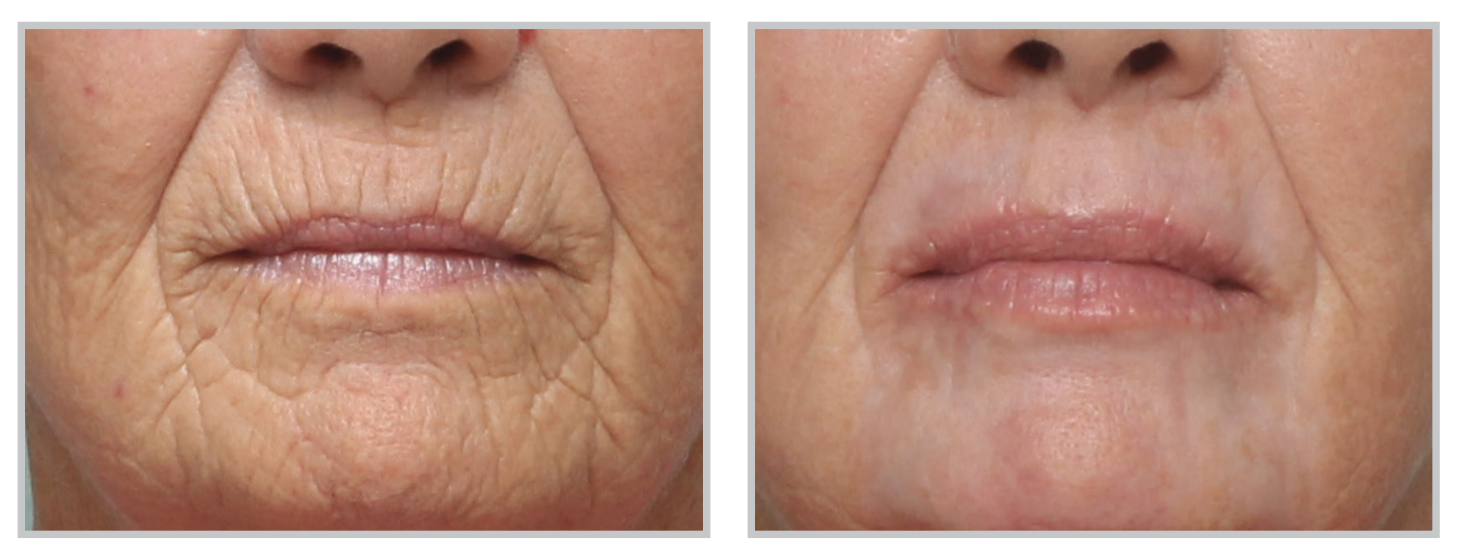
BEFORE / AFTER | 4 months post 1 treatment | courtesy of Jacque LeBeau, MD
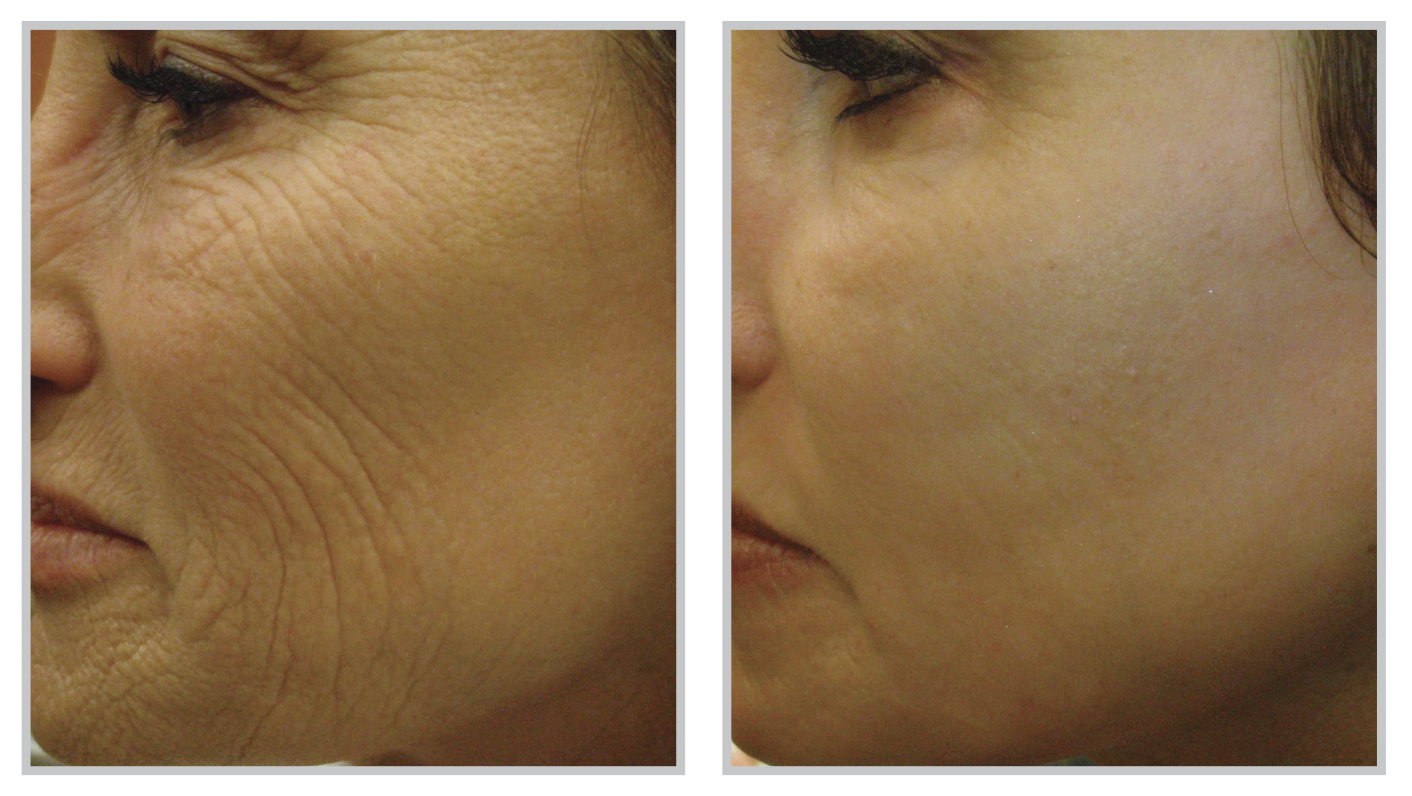
BEFORE / AFTER | Four months post 1 treatment | courtesy of Stanley J. Kovak, MD
Is Deep Resurfacing Right for You?
Deep resurfacing is not appropriate for every patient, and it is not the right starting point for every concern.
A consultation is where that assessment happens. We evaluate your skin carefully, review your goals and history, and help you understand whether deep resurfacing is appropriate - and, if so, which approach best fits your anatomy, recovery tolerance, and priorities.
Considering deep resurfacing in Kelowna? Book a consultation to learn whether erbium resurfacing is appropriate for your skin, your goals, and your downtime tolerance.

Meet Dr. Dianne Burrows, MD, FRCPC
Dr. Burrows is the Founder and Medical Director of Interior Dermatology Centre in Kelowna, BC.
A board-certified dermatologist, Clinical Instructor in UBC’s Department of Dermatology and Skin Science, and active clinical investigator, she brings a thoughtful, evidence-based approach to both medical and cosmetic dermatology.