Adult Acne Is Different: A Dermatologist’s Approach to Breakouts, Congestion, and Inflammation
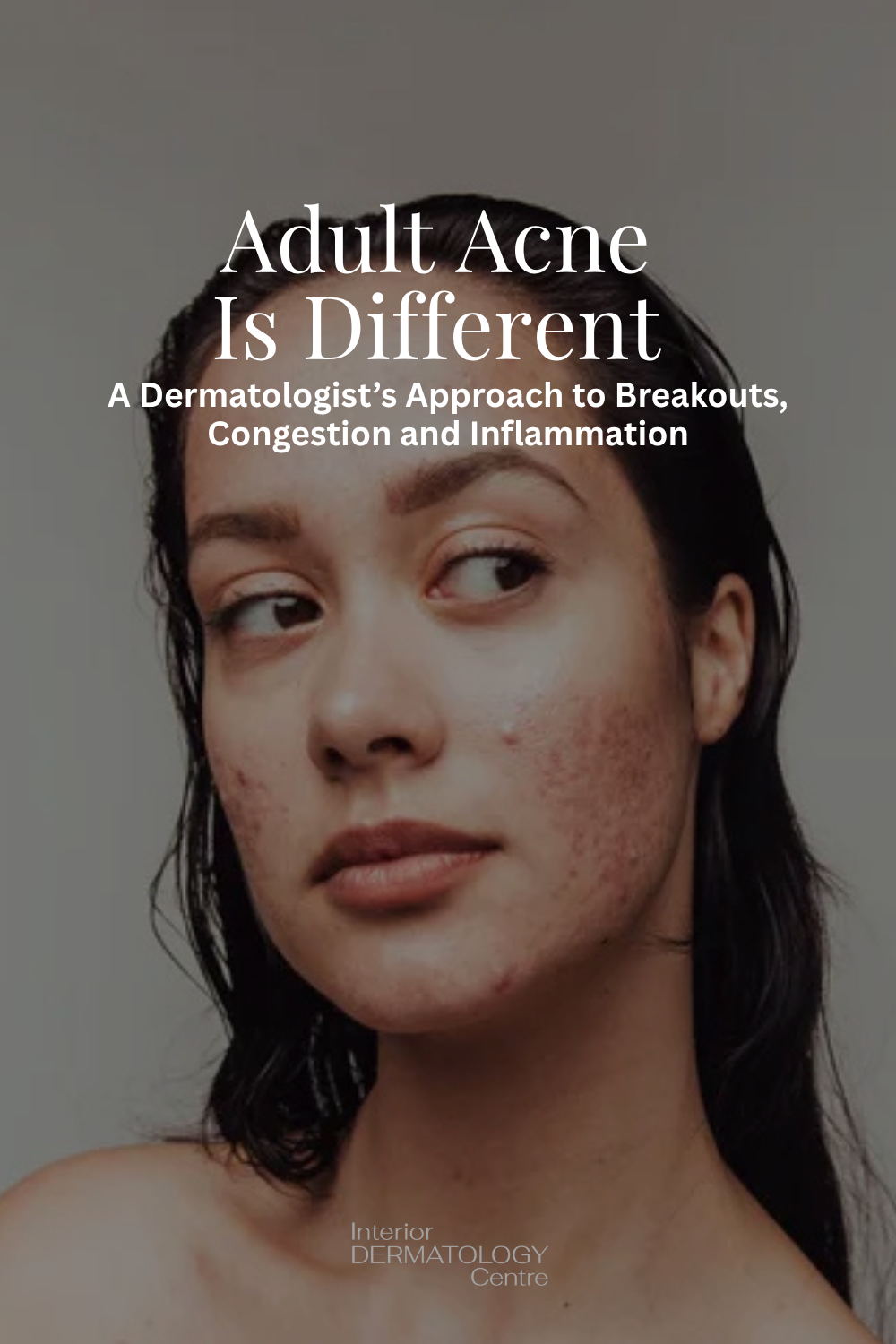
Most people expect acne to follow them through adolescence and then disappear. For many adults — particularly women — that simply isn’t what happens.
Breakouts at 32. Congestion at 40. Inflamed or sensitive skin that suddenly seems to behave differently than it did at 17.
Adult acne can develop in people who had acne as teenagers, but it can also appear for the first time well into adulthood. While the same core biological processes involved in adolescent acne remain relevant, the pattern, contributing factors and treatment considerations can look quite different.
At Interior Dermatology Centre in Kelowna, the starting point is not simply finding a stronger cleanser or another acne product. It is determining what type of acne is present, what may be contributing to it, and what treatment approach makes sense for that particular patient.
Why Adult Acne Can Behave Differently
Acne at any age involves several interconnected processes, including sebum production, follicular plugging, Cutibacterium acnes and inflammation.
During adolescence, hormonal changes associated with puberty play an important role in stimulating sebaceous glands and increasing oil production.
In adulthood, the picture can be less straightforward.
Hormonal fluctuations may remain important, particularly in women. Changes associated with the menstrual cycle, pregnancy, starting or stopping hormonal contraception, perimenopause and some underlying hormonal conditions can influence breakouts. Genetics, medications, stress and skincare or haircare products can also contribute.
Adult acne may also have a different pattern. Some patients develop predominantly lower-face acne around the chin and jawline, while others experience persistent congestion, inflammatory lesions or a combination of several types.
This is one reason a routine that worked at 17 may no longer be enough at 37 — and why increasingly aggressive acne products can sometimes leave the skin more irritated without actually controlling the disease.
What Adult Acne Can Look Like
Identifying the type of acne matters because different presentations may require different approaches.
Comedonal Acne: Persistent Congestion
Comedones are clogged follicles. Open comedones, commonly called blackheads, remain open at the skin surface. Their dark colour comes from oxidation rather than dirt. Closed comedones, often called whiteheads, develop when the follicular opening remains covered.
Persistent comedonal acne reflects abnormal retention and shedding of cells within the follicle. Although patients often describe this simply as “congestion,” repeated extractions or aggressive exfoliation do not necessarily address the tendency for those follicles to keep becoming blocked.
Inflammatory Acne
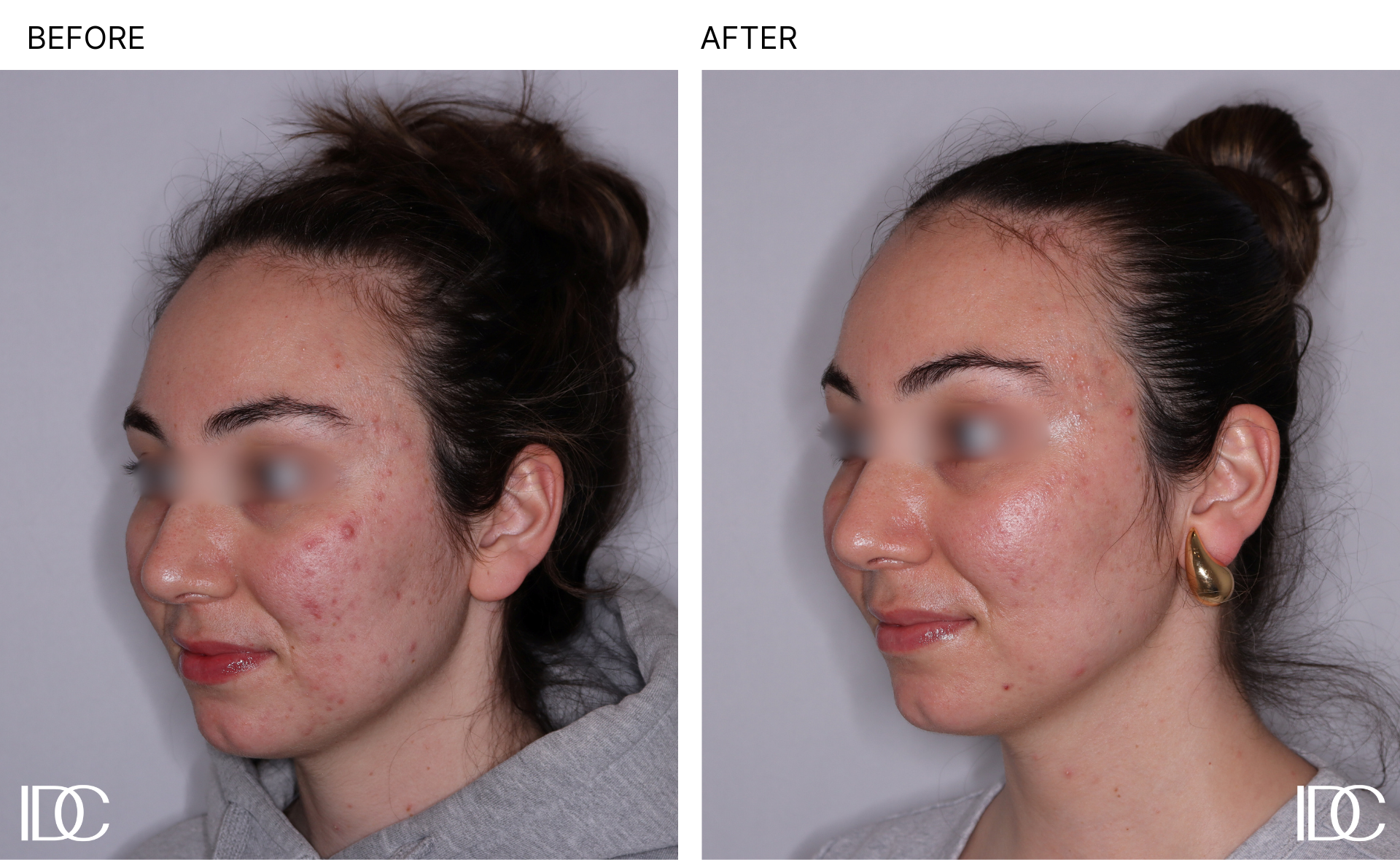
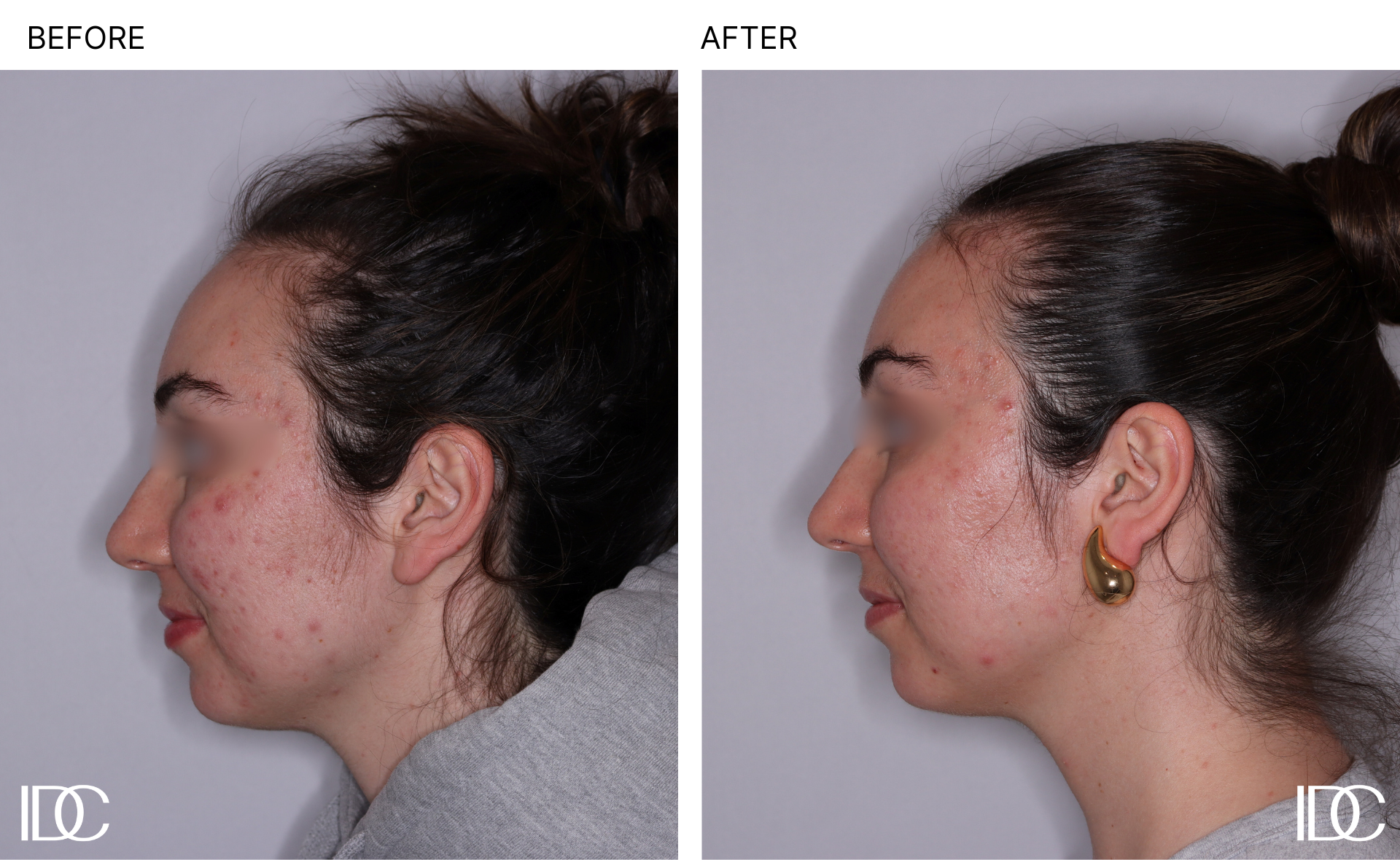
Papules and pustules develop when a clogged follicle becomes inflamed. Adult inflammatory acne may cluster around the lower face, chin and jawline, particularly when there is a hormonal component, although location alone does not establish the cause.
Nodular and Cystic Acne
Deeper inflammatory lesions can be painful and carry a greater risk of permanent scarring.
Because this type of acne is less likely to respond adequately to skincare or topical treatment alone, earlier medical assessment is important. Depending on severity, scarring risk and previous treatment response, management may include topical therapy together with systemic treatments such as oral antibiotics, hormonal therapy or isotretinoin.
The goal is not simply to clear the breakout you can see today. It is also to control inflammation early enough to reduce the risk of permanent scarring.
What Is Driving Adult Acne?
There is rarely one universal explanation.
Hormonal Changes
Androgens continue to influence sebaceous gland activity throughout adulthood. Changes associated with the menstrual cycle, pregnancy, perimenopause, hormonal contraception and conditions such as polycystic ovary syndrome may contribute to acne in some patients.
A cyclical pattern or lower-face distribution can suggest a hormonal component, but those patterns need to be considered within the broader clinical picture.
Stress and Other Factors
Stress can aggravate acne in some patients, and certain dietary patterns may influence acne in susceptible individuals. These relationships are complex and should not be treated as a simple explanation for every breakout.
A proper assessment looks more broadly at hormonal patterns, medications, family history, skincare and haircare products, previous treatment and the type of acne actually present.
Your Skincare Routine May Be Part of the Picture
Some skincare, makeup and haircare products can contribute to follicular plugging in acne-prone patients. The opposite problem is also common: doing too much.
Layering exfoliating acids, retinoids, benzoyl peroxide and other active ingredients can produce substantial dryness and irritation. A compromised skin barrier does not necessarily cause acne, but excessive irritation can make already-inflamed skin harder to manage.
Sometimes simplifying a routine is as important as adding another treatment.
Why Over-the-Counter Acne Treatment Sometimes Isn’t Enough
Many over-the-counter acne ingredients are effective when used appropriately. Salicylic acid can help with comedonal acne. Benzoyl peroxide is an evidence-based acne treatment that can be useful for inflammatory acne. Retinoids help normalize follicular cell turnover and prevent clogged pores.
The challenge is selecting the right treatment and using it at a strength and frequency the skin can tolerate.
Benzoyl peroxide and retinoids, for example, can cause dryness and irritation, particularly when several active products are introduced simultaneously. That does not mean they are inappropriate; it means the regimen needs to be individualized.
Mild acne may respond well to an appropriate over-the-counter routine. Persistent inflammatory acne, painful nodules, acne beginning to scar, or breakouts that have not improved despite appropriate treatment deserve medical assessment.
How We Approach Adult Acne in Kelowna at Interior Dermatology Centre
At IDC, treatment begins with the clinical presentation rather than a default acne protocol.
Depending on the patient, an assessment may consider:
the type, distribution and severity of acne;
hormonal patterns;
current skincare and haircare;
skin irritation and barrier status;
previous treatment and response;
medications and relevant medical history;
scarring risk; and
the patient’s goals and tolerance for different treatments.
The treatment plan follows from that assessment — not the other way around.
Medical Treatment for Adult Acne
Prescription topical treatment may be appropriate for many patients and can include topical retinoids, benzoyl peroxide, azelaic acid or combination therapies depending on the presentation.
Patients with more significant inflammatory acne, a strong hormonal component or deeper nodular disease may require systemic treatment. Options can include oral antibiotics, hormonal therapy such as spironolactone in appropriate patients, or isotretinoin.
Isotretinoin Is Not Simply a “Last Resort”
Isotretinoin — often still referred to by the former brand name Accutane — is sometimes treated as something that should only be considered after every conceivable alternative has failed.
That is not always the best way to think about it.
For severe acne, acne that is causing or threatening permanent scarring, or disease that has not responded adequately to other treatments, isotretinoin can be one of the most effective options available.
Appropriate patient selection, counselling and medical monitoring are essential. The question is not whether isotretinoin should be avoided at all costs, but whether its benefits and risks make it the appropriate treatment for that patient.
Where Do BBL and RF Microneedling Fit?
Medical treatment remains the foundation for most patients with active acne.
For selected patients, light- and energy-based procedures may be useful alongside, rather than instead of, medical treatment.
At IDC, BBL may be considered for some patients with inflammatory acne and associated post-acne redness. Light-based acne therapies can improve inflammatory lesions in appropriate patients, although their role depends on the individual presentation.
Fractional RF microneedling has also been studied for active inflammatory acne and acne scarring, with clinical research demonstrating improvement in inflammatory lesions and sebum production in some patients.
The important point is that a technology is not selected simply because it “treats acne.” Its usefulness depends on what type of acne is present, whether medical treatment is required, the patient’s skin and the broader treatment plan.
Acne Marks Are Not All Acne Scars
One of the most useful distinctions in acne treatment is recognizing that not everything left behind after a breakout is technically a scar.
Post-Inflammatory Erythema (PIE)
PIE refers to persistent red or pink marks that remain after an inflammatory acne lesion resolves.
Post-Inflammatory Hyperpigmentation (PIH)
PIH refers to residual brown or darker pigmentation following inflammation.
True Acne Scarring
True acne scars involve a structural change in the skin. Depressed or atrophic scars are commonly classified as:
Ice-pick scars: narrow, deep depressions;
Boxcar scars: broader depressions with defined edges;
Rolling scars: wider depressions that may appear tethered or undulating.
Some patients instead develop raised hypertrophic or keloid scars. These distinctions matter because the treatment that improves redness or pigmentation is not necessarily the treatment that will correct a structurally depressed scar.
Subcision: When the Scar Is Tethered From Below
Some rolling acne scars are pulled downward by fibrous attachments beneath the skin.
For appropriate scars, Dr. Burrows may use a procedure called subcision to release those attachments. A needle or cannula is passed beneath the scar to mechanically separate the fibrous bands tethering the skin downward.
This is a good example of why acne-scar treatment needs to begin with scar type, not with a device.
If a scar is mechanically tethered, resurfacing the surface alone may not adequately address the structure underneath it.
Resurfacing and Combination Acne-Scar Treatment
Other treatment options may include erbium laser resurfacing, HALO, RF microneedling or BBL depending on whether the primary problem is structural scarring, surface texture, persistent redness or pigmentation.
Often more than one issue is present.
A patient might have rolling scars requiring subcision, textural irregularity that benefits from resurfacing, and persistent redness requiring a different treatment again. In those situations, thoughtful combination treatment and sequencing can be more useful than expecting one technology to solve everything.
Significant active acne is also generally controlled before more aggressive scar-remodelling procedures are undertaken.
Adult Acne Usually Requires a Plan, Not Another Product
Adult acne can be frustrating, particularly for patients who have spent years moving from one skincare routine to another without understanding why the breakouts continue.
Meaningful improvement is achievable, but the answer is rarely simply adding another active ingredient.
The first step is understanding what is actually happening in the skin.
From there, treatment can be built around the acne type, severity, contributing factors, scarring risk, skin tolerance and patient goals.
If persistent breakouts, congestion, painful acne or acne scarring continue despite what you have tried, a dermatologist-led assessment can help determine the most appropriate next step.
Frequently Asked Questions About Adult Acne
Why am I getting acne in my 30s or 40s?
Adult acne can develop even in people who had clear skin as teenagers. Hormonal changes, genetics, medications, stress and skincare or haircare products may all contribute.
Is adult acne always hormonal?
No. Hormones can play a significant role, particularly in women, but not every case of adult acne is purely hormonal. The pattern of acne and the patient’s broader medical and treatment history help determine what may be contributing.
Why isn’t my skincare clearing my acne?
Different forms of acne respond differently to treatment. A product that helps clogged pores may not adequately control deeper inflammatory acne, while using too many active products can create significant irritation.
Persistent acne despite an appropriate routine may be a sign that it is time to move from product experimentation to medical assessment.
Can adult acne cause permanent scars?
Yes. Deep inflammatory, nodular and cystic acne carries a greater risk of permanent textural scarring. Red or brown marks following acne are also common, but PIE and PIH are different from true structural scars and may require different treatment approaches.
What treatments are available for adult acne in Kelowna?
Treatment at Interior Dermatology Centre depends on the type and severity of acne present. Options may include prescription topical treatments, oral medications, hormonal therapy, isotretinoin and, for selected patients, adjunctive procedures such as BBL or RF microneedling.
Established acne scarring may require a different plan incorporating treatments such as subcision, erbium laser resurfacing, HALO, RF microneedling or BBL or a combination depending on scar type and associated redness or pigmentation.
Persistent acne deserves more than trial and error.
Learn more about adult acne treatment at Interior Dermatology Centre and how a dermatologist-led assessment can help identify the appropriate approach for your skin.

Meet Dr. Dianne Burrows, MD, FRCPC
Dr. Burrows is the Founder and Medical Director of Interior Dermatology Centre in Kelowna, BC.
A board-certified dermatologist, Clinical Instructor in UBC’s Department of Dermatology and Skin Science, and active clinical investigator, she brings a thoughtful, evidence-based approach to both medical and cosmetic dermatology.