Why Some Skin Stays Red, Reactive, or Easily Inflamed
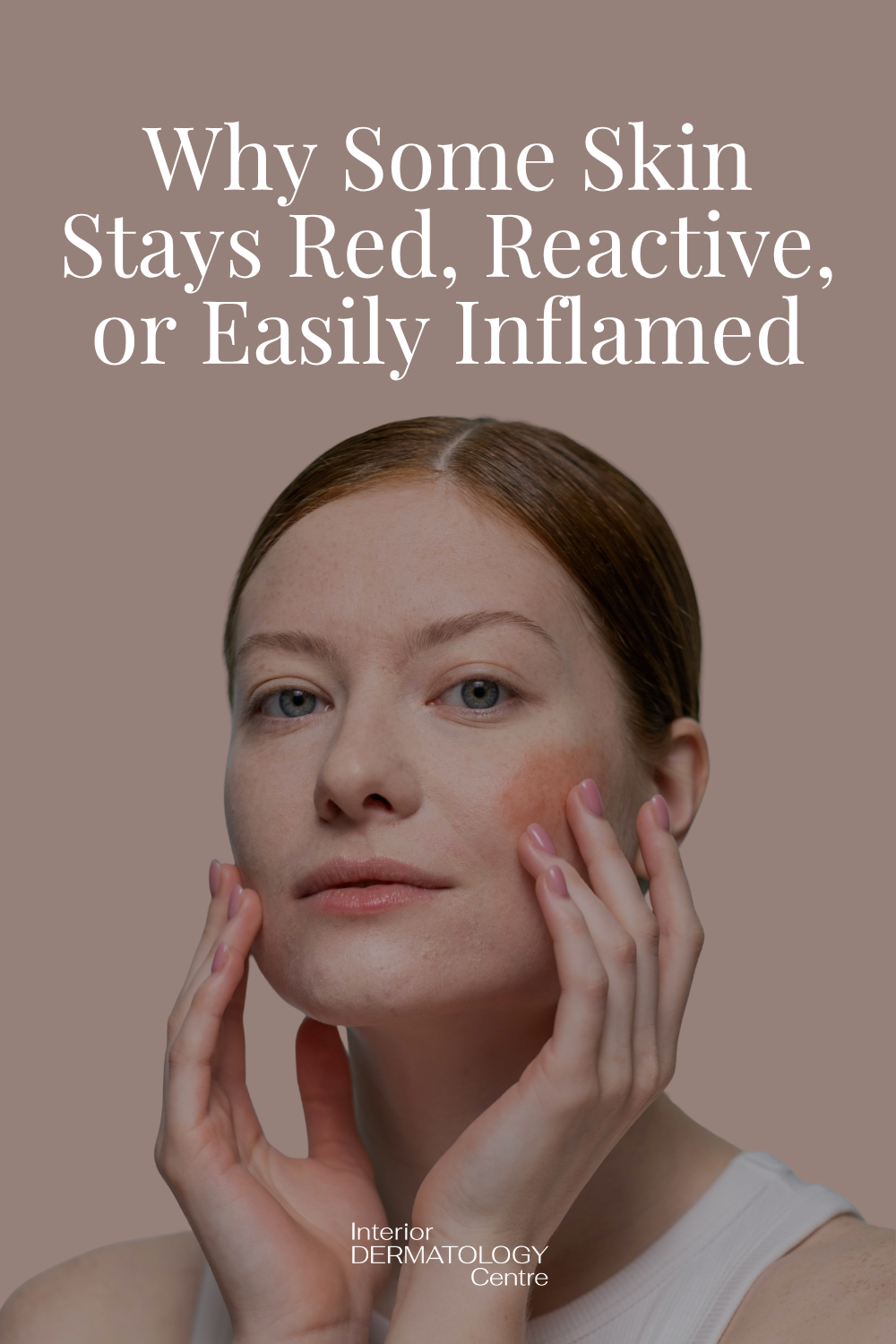
Why Some Skin Stays Red, Reactive, or Easily Inflamed
A Dermatologist's Guide to Understanding and Treating Persistent Redness
For some patients, skin redness is situational - a temporary flush after exercise, a brief reaction to heat. It settles, and life continues.
For others, the redness doesn't settle. It's there in the morning. It's still there after a gentle cleanser. It worsens with a glass of wine, a warm room, or a change in season. And for many people, it's been there for years.
Persistent facial redness is one of the most common concerns we evaluate at Interior Dermatology Centre - and also one of the most misunderstood. Patients often arrive having tried calming skincare for months, or having avoided triggers for years, without meaningful improvement.
That's usually because the redness is being managed, not treated. The distinction matters.
Redness Is a Signal, Not a Skin Type
It's common for patients to describe themselves as having "sensitive skin" - and while that's an understandable way to frame it, sensitivity is rarely the root cause. Persistent redness typically reflects something specific happening beneath the skin's surface.
Depending on the pattern, triggers, and clinical presentation, redness can reflect:
Overactive or dilated blood vessels near the skin's surface, which become visible as diffuse redness or discrete spider veins (telangiectasia)
Chronic inflammation within the skin, which can drive both redness and reactivity to everyday products or temperature changes
A disrupted skin barrier, where the outermost layer of skin is no longer effectively protecting against environmental triggers
Underlying dermatological conditions, including rosacea, seborrheic dermatitis (a form of inflammatory scaling), eczema (atopic dermatitis), or acne-related inflammation
This is why the first and most important step in addressing redness is evaluation - not treatment. Different causes respond to different approaches, and applying the wrong one can worsen the underlying problem.
The Most Common Culprit: Rosacea
Rosacea is a chronic inflammatory skin condition that affects millions of adults, most commonly appearing on the cheeks, nose, chin, and forehead. It often develops gradually - beginning with easy flushing and progressing to more persistent redness, visible vessels, or skin thickening over time.
Several features distinguish rosacea from other causes of redness:
It tends to flare with recognizable triggers: heat, spicy foods, alcohol, sun exposure, stress, and certain skincare ingredients
It does not fully resolve on its own, and typically worsens over time without appropriate management
It can present with visible blood vessels (telangiectasia), papules, or pustules that resemble acne - but are driven by different mechanisms
It can be exacerbated by products marketed as "soothing" - particularly those with fragrance, alcohol, or active ingredients that increase sensitivity
Rosacea is manageable. It is not curable, but with appropriate evaluation, patients can significantly reduce both baseline redness and the frequency of flares. The key is understanding which subtype is present and selecting treatment accordingly.
Why Skincare Alone Often Isn't Enough
The most common pattern we see is this: a patient has been managing their redness with gentle, barrier-supportive skincare for some time. Their skin feels calmer on that routine. But the redness itself - the background flush, the visible vessels, the reactive flares - hasn't changed meaningfully.
This is because topical skincare works primarily at the level of the skin barrier. It can reduce reactivity, support healing, and minimize irritation. What it cannot do is eliminate abnormal blood vessels that have formed beneath the surface, reduce chronic vascular overreactivity, or remodel the deeper layers of skin where much of the structural inflammation resides.
For many patients with persistent redness, effective treatment requires addressing the underlying mechanism - not just the surface experience of it.
How We Approach Redness at Interior Dermatology Centre
At IDC, we begin with a thorough dermatological evaluation. Before any treatment is recommended, we want to understand:
What type of redness is present: diffuse background redness, visible vessels, flushing, papules, or a combination
What triggers it and what helps, even partially
Whether an underlying condition like rosacea, eczema, or seborrheic dermatitis is contributing
Your skin history, treatment history, and what's been tried before
Practical considerations: downtime tolerance, time of year, and long-term maintenance
Treatment is then planned based on what the evaluation reveals, not on a preset protocol.
Treatment Options for Persistent Redness
Depending on the type and severity of redness, a number of treatment approaches may be appropriate. These are typically considered as part of a broader plan rather than standalone interventions.
BroadBand Light (BBL): Targeting the Vessels
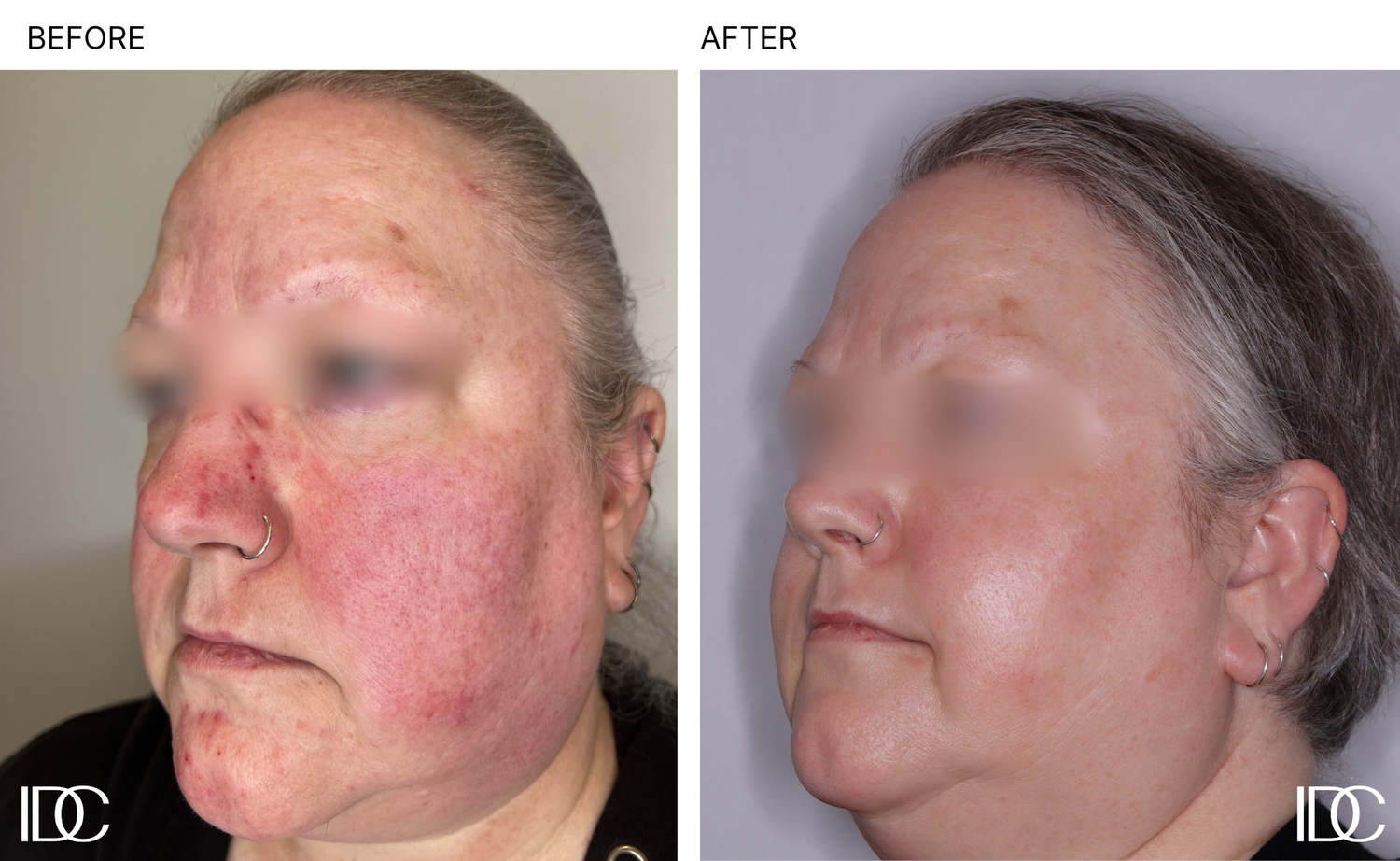
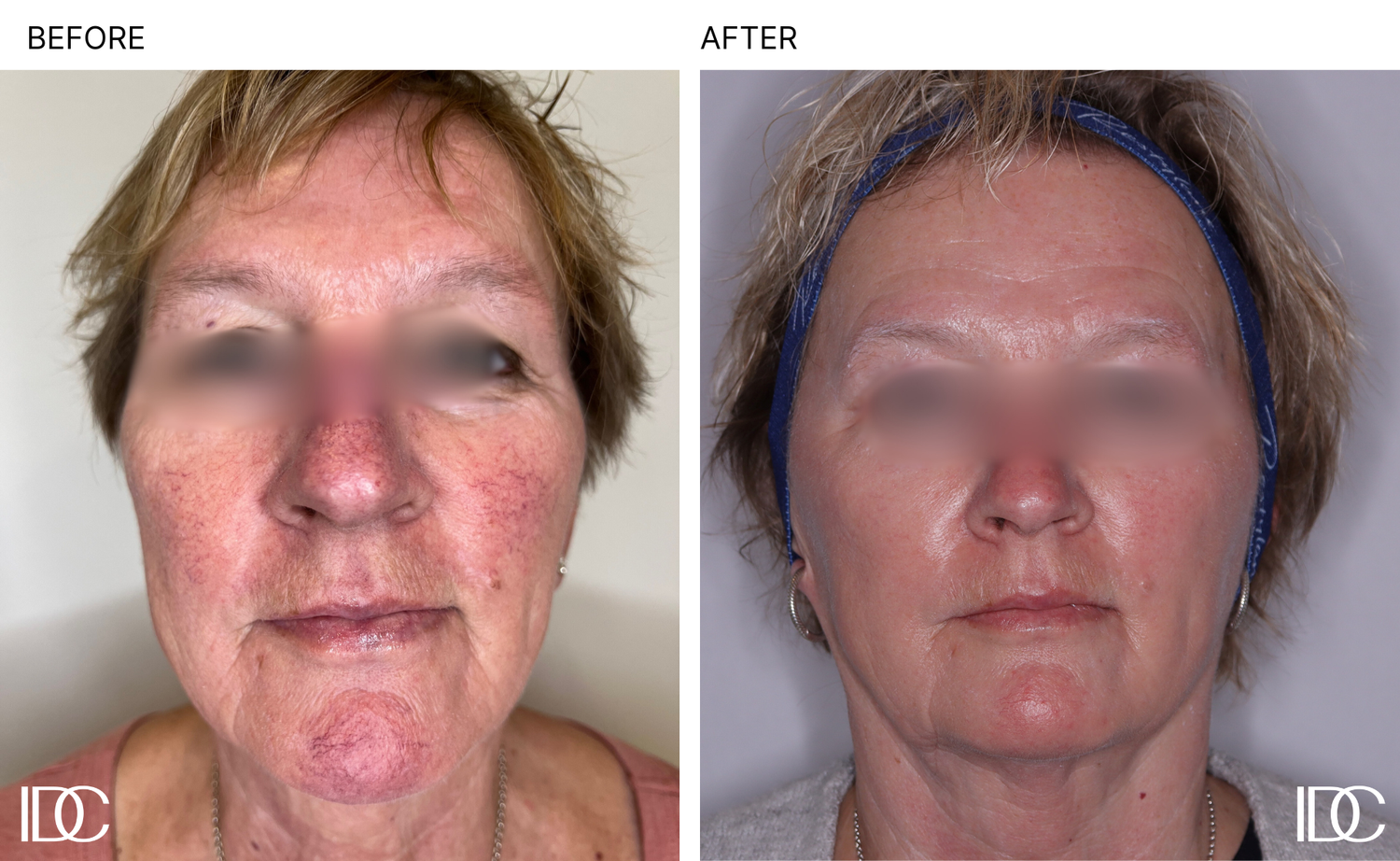
For redness driven by visible blood vessels, BroadBand Light (BBL) is often a primary consideration. BBL delivers specific wavelengths of light that are absorbed by hemoglobin - the red pigment in blood vessels - gently heating abnormal vessels and signalling the body to reabsorb them.
It is particularly effective for rosacea-related redness, visible facial vessels (telangiectasia), flushing, and diffuse redness. BBL works primarily at the vascular level, which is why it is often the most appropriate first-line treatment when vessels are a significant component of what the patient is experiencing.
Most patients require a series of treatments to achieve meaningful improvement, with ongoing maintenance to sustain results over time. Downtime is typically minimal.
[BEFORE AND AFTER PHOTOS]
HALO® Hybrid Fractional Laser: Addressing the Skin Environment
When redness is accompanied by compromised skin texture, uneven tone, or a chronically reactive skin barrier, HALO may be considered as part of the treatment plan.
HALO is a hybrid fractional laser that treats both the superficial skin surface and the deeper dermis simultaneously - addressing pigment and texture at one level while stimulating collagen and cellular repair at a deeper level. For redness patients, this matters because it can reduce chronic inflammation within the skin, strengthen the skin barrier, and make skin less reactive over time.
HALO is not always the first treatment selected for redness, but it plays an important role when the skin environment itself - barrier integrity, inflammation, and structural resilience - needs attention beyond what vascular-focused treatment alone can provide.
[BEFORE AND AFTER PHOTOS]
RF Microneedling: Supporting Structure and Long-Term Resilience
Radiofrequency microneedling (RF microneedling) works by creating controlled micro-channels in the skin while delivering radiofrequency energy into the dermis. This activates the skin's natural healing response, stimulating the production of new collagen and elastin.
In the context of redness and reactive skin, RF microneedling can support longer-term structural improvement - particularly for patients whose skin has become persistently reactive and thin over time. It is often considered as a component of a broader combination plan when skin resilience and barrier quality need to be rebuilt.
Medical Management and Skincare
For some patients, particularly those with active rosacea or inflammatory skin conditions, medical management plays a central role alongside or prior to device-based treatments. This may include prescription topical therapies, oral medications, or specific product guidance to support the skin barrier and reduce triggers.
Medical-grade skincare is also an important part of long-term redness management - not as a standalone solution, but as a foundation. Barrier-supportive products, appropriate SPF (particularly important in Kelowna's high-UV environment), and the removal of irritating ingredients can all meaningfully reduce reactivity between treatments.
[BEFORE AND AFTER PHOTOS]
Not Every Approach Is Right for Every Patient
The right treatment plan for persistent redness depends heavily on the type of redness present, the underlying condition driving it, and individual factors like skin tone, history, and lifestyle. BBL may be the primary recommendation for one patient and a secondary consideration for another. HALO may be part of a combination plan for some and not indicated at all for others.
Treatment timing also matters. In Kelowna, where sun exposure is a significant factor for much of the year, certain treatments are better planned for fall and winter months when UV exposure and outdoor activity can be more easily managed during recovery.
A thorough consultation ensures that the plan is aligned with your skin's specific needs, your goals, and your practical situation - not just the most common protocol.
The Goal: Calm Skin Is Healthy Skin
Persistent redness is not something patients simply have to live with. For most people, there is a meaningful, evidence-based path toward calmer, more resilient skin - one that starts with understanding what's driving it.
If you've noticed that your skin stays red, reacts easily, or has never fully settled despite trying calmer skincare routines, a dermatologist-led evaluation is the right place to start.
Is Deep Resurfacing Right for You?
Deep resurfacing is not appropriate for every patient, and it is not the right starting point for every concern.
A consultation is where that assessment happens. We evaluate your skin carefully, review your goals and history, and help you understand whether deep resurfacing is appropriate - and, if so, which approach best fits your anatomy, recovery tolerance, and priorities.
Considering deep resurfacing in Kelowna? Book a consultation to learn whether erbium resurfacing is appropriate for your skin, your goals, and your downtime tolerance.

Meet Dr. Dianne Burrows, MD, FRCPC
Dr. Burrows is the Founder and Medical Director of Interior Dermatology Centre in Kelowna, BC.
A board-certified dermatologist, Clinical Instructor in UBC’s Department of Dermatology and Skin Science, and active clinical investigator, she brings a thoughtful, evidence-based approach to both medical and cosmetic dermatology.