Summer-Safe Treatments: How to Maintain Your Skin Health Through the High-UV Season
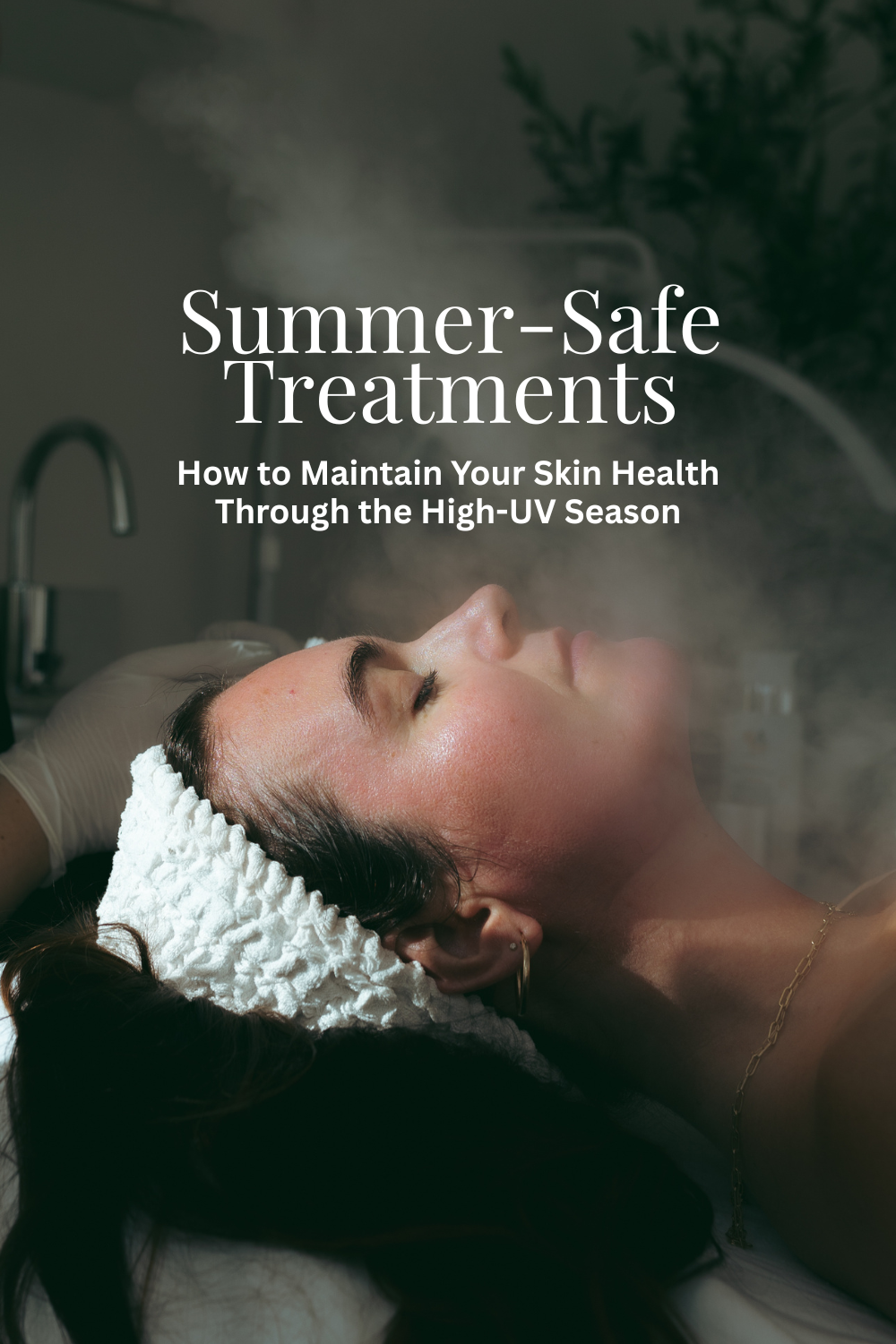
A lot of patients go quiet in the summer. They assume that once the sun comes out, treatments go on hold - that anything beyond sunscreen is off the table until September.
That assumption makes sense for certain treatments. Deep resurfacing, high-intensity lasers, and anything requiring significant downtime or strict sun avoidance is generally better planned for fall and winter in Kelowna, where UV exposure is significant and outdoor activity is a way of life.
But stepping back entirely from your skin health for four months isn't necessary - and for many patients, it isn't in their best interest. For patients in Kelowna who spend more time outdoors during the summer, timing and treatment selection become especially important.
The key is choosing the right treatments for the season - and understanding how to support your skin's ability to heal and respond well regardless of when you treat.
A number of treatments may be appropriate during the summer months for the right patient - including RF microneedling, MOXI laser, JetPeel, and neuromodulators. This isn't an exhaustive list, and some treatments typically associated with sun sensitivity - like BBL - may still be appropriate for patients who are rigorous about sun protection and not actively tanned.
At IDC, treatment planning is guided by dermatologist-led assessment. Skin type, recent sun exposure, pigmentation risk, treatment history, active skin conditions, and patient goals all influence whether a treatment is appropriate during the summer months. The goal is not to offer a generic summer treatment menu — it is to help each patient understand what is appropriate for their skin, their risk factors, and their treatment goals.
Why Summer Requires a Different Treatment Lens
In Kelowna, summer means sustained UV exposure, more time outdoors, and skin that is often more reactive - more prone to pigmentation, barrier disruption, and dehydration than at other times of year.
It's worth understanding why sun protection matters so much around any skin treatment, regardless of season. Every device-based treatment - lasers, RF energy, microneedling - works by creating a very specific, controlled stress to the skin and expecting a predictable healing response in return. When the skin is simultaneously managing UV damage, free radical stress, or the physiological shift that comes with sunburn, that healing response can be disrupted. The skin's resources shift toward UV protection and repair rather than the collagen remodeling or vascular response the treatment was designed to stimulate.
For certain treatments - particularly those that target pigment, like BBL - active tanning or recent significant sun exposure introduces an added consideration: the device is calibrated to seek out specific pigment targets, and excess melanin from a tan can affect both efficacy and the risk of unintended pigment changes.
This doesn't mean summer treatments are inherently risky. It means consistent, diligent sun protection isn't optional — it's part of how treatments work as intended. Patients who are disciplined about SPF, avoid prolonged peak-UV exposure, and come to treatment without a recent tan have considerably more flexibility in what they can do through the warmer months.
Treatments Well-Suited to Summer
For the right patient, several treatments may be appropriate during the summer months, particularly when paired with consistent sun protection and thoughtful treatment planning.
RF Microneedling: Maintaining Structural Progress Through Summer
Radiofrequency microneedling works by creating controlled micro-channels in the skin while delivering radiofrequency energy into the dermis. This stimulates the production of new collagen and elastin - improving skin texture, tone, firmness, and resilience from within.
Because RF microneedling generally causes less surface disruption than many laser treatments, it may be an appropriate summer option for selected patients. However, skin type, recent sun exposure, and pigmentation risk still need to be assessed carefully.
For patients already working through a treatment plan - whether addressing laxity, texture, redness, or acne scarring - RF microneedling allows that progress to continue through summer rather than stalling until fall. It is also a strong standalone option for patients who want to maintain skin quality without committing to more intensive treatment.
Sun protection after treatment remains important. We recommend avoiding direct prolonged sun exposure in the days immediately following a session and keeping SPF consistent throughout.
MOXI: Gentle Maintenance - and a Pre-Event Option
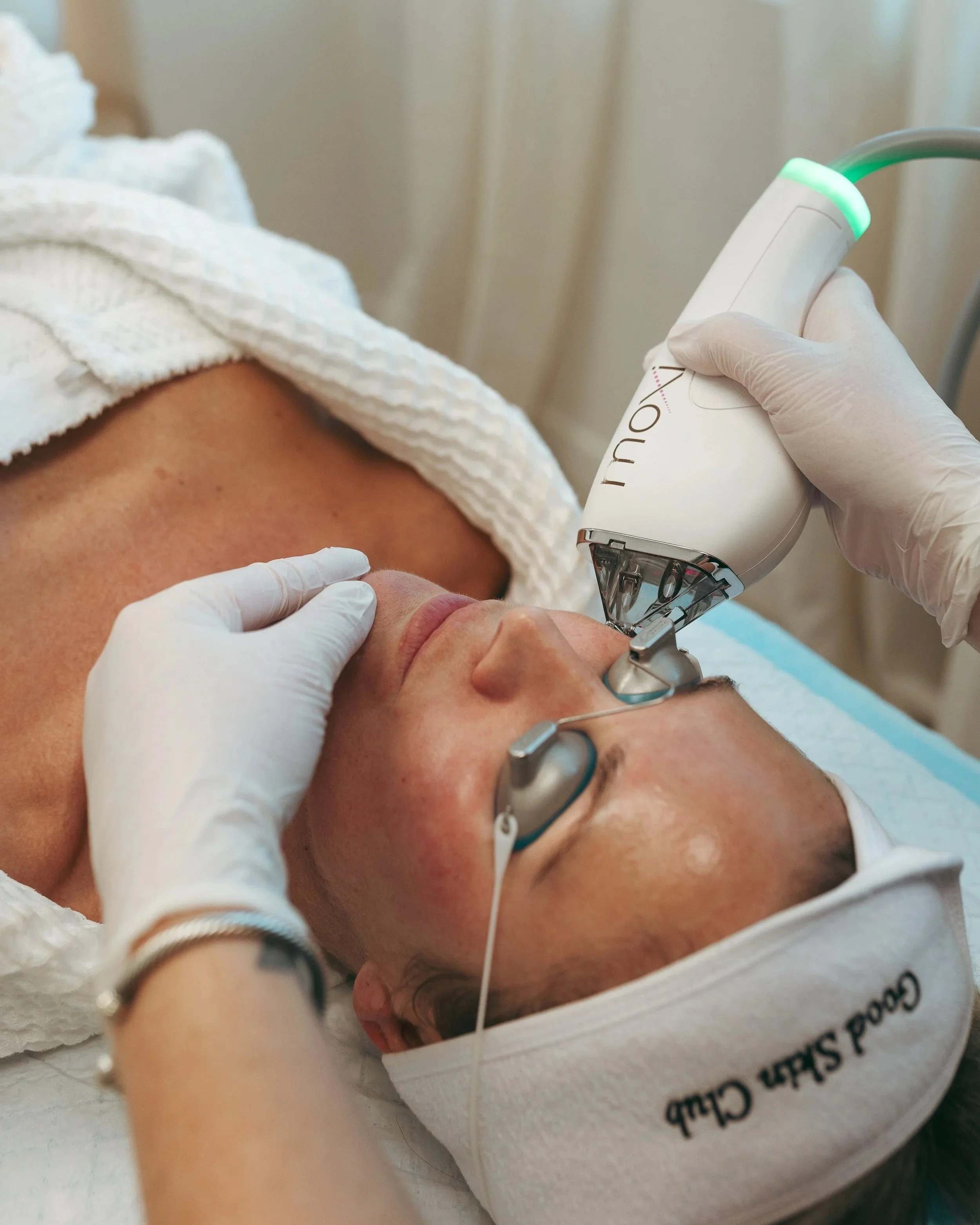
MOXI is a non-ablative fractional laser - meaning it works beneath the skin surface without removing the outer layer. It delivers gentle laser energy that stimulates collagen production, improves uneven tone, and addresses early pigmentation and textural irregularities.
It is one of the lower-intensity options in the laser spectrum, designed for maintenance and prevention rather than significant correction. That profile makes it well-suited to summer: minimal downtime (typically 24 to 72 hours of mild redness and light peeling), a low disruption profile when sun protection is consistently maintained, and a refreshed, more even appearance that holds well through the season.
MOXI is also worth considering as a pre-event treatment for patients who want smoother, brighter skin with a natural glow — not immediate pre-event like JetPeel, but planned a few weeks out to allow the skin's collagen response to develop. For patients with a summer wedding, reunion, or significant occasion on the calendar, this timing can work well.
MOXI is not the right choice for patients with active sun damage, recent significant UV exposure, or skin that is already compromised. Timing and patient selection matter, and a dermatologist assessment is the appropriate starting point.
JetPeel: Skin Support Without Disruption
JetPeel is a non-invasive treatment that uses pressurised jets of saline and customised serums to deeply cleanse, exfoliate, and hydrate the skin simultaneously. It does not use heat, lasers, or needles.
From a seasonal standpoint, JetPeel has no meaningful sun-sensitivity implications - it is appropriate year-round, including summer. What makes it particularly relevant in warmer months is what it addresses: dehydration, congestion, dullness, and the general fatigue that summer sun, heat, and environmental exposure can create in skin.
It is also an effective immediate pre-event option. Patients often notice visible improvement in skin brightness, smoothness, and hydration — making it a practical choice in the days before a significant occasion when you want your skin looking and feeling its best.
JetPeel is best understood as a high-quality skin support treatment rather than a corrective one. It maintains and enhances skin condition rather than remodelling it. As part of a broader treatment plan, it complements more intensive work done at other times of year.
Neuromodulators: Year-Round, No Adjustments Required
Neuromodulators - including Botox and Dysport - temporarily relax the muscles responsible for repetitive expression lines: forehead creases, crow's feet, frown lines, and others.
There is no season-based reason to pause neuromodulator treatments. They do not increase sun sensitivity, involve no surface recovery, and results are not influenced by UV exposure. Most patients return to regular daily activities right away, with standard aftercare guidance.
For patients who time their appointments every three to six months, summer falls within that cycle for most. Maintaining a consistent schedule - rather than stopping and restarting - typically supports more predictable, natural-looking results over time.
A Note on Sun Protection
Every summer treatment at IDC is accompanied by the same guidance: sunscreen is not optional.
Kelowna sits at a higher elevation than most Canadian cities, with UV index levels that regularly reach the high or extreme range during summer months. That means UV exposure here is more intense than patients moving from other parts of the country may expect — and its effects on skin are cumulative.
Daily broad-spectrum SPF of at least 30, reapplied every two hours when outdoors, is the baseline recommendation regardless of treatment. A wide-brimmed hat on peak-UV days is not excessive — it is appropriate clinical advice for anyone undergoing any skin treatment in this environment.
Not Every Treatment Is Right for Every Patient in Every Season
Summer-safe does not mean universally appropriate. Whether a given treatment makes sense for a patient depends on their skin type, recent sun history, active skin conditions, and what else is happening in their treatment plan.
A consultation ensures that the timing, selection, and sequencing of any treatment reflects your skin's actual condition - not a general calendar assumption.
If you've been pausing your treatment plan each summer out of caution, it's worth having a conversation about which elements can continue and how.
With the right treatment selection, consistent sun protection, and dermatologist-guided planning, it's possible to maintain and support your skin health through the season — and arrive at fall in a better position to resume more intensive work.
Frequently Asked Questions
Can I have laser treatments in the summer?
Some laser treatments may be appropriate in summer for selected patients, but this depends on the type of laser, skin type, recent sun exposure, whether the skin is tanned, and how consistently the patient uses sun protection. A dermatologist-led assessment is the right starting point.
Is MOXI safe during the summer?
MOXI may be considered during the summer for the right patient, especially when sun exposure is limited and SPF use is consistent. A dermatologist-led assessment helps determine whether the timing is appropriate for your skin and goals.
Can I have BBL in the summer?
BBL requires more caution in summer because it targets pigment. It is generally not appropriate for actively tanned skin or after recent significant sun exposure, but may be considered for selected patients who are diligent with sun protection. Each situation is assessed individually at IDC.
Can I get Botox or Dysport in the summer?
Yes. Neuromodulator treatments such as Botox and Dysport are not season-dependent and do not increase sun sensitivity. Most patients return to regular daily activities right away, with standard aftercare guidance.
What treatments are commonly considered during summer at IDC?
Depending on the patient, treatments such as RF microneedling, MOXI, JetPeel, and neuromodulators may be considered during summer. Treatment choice is always based on dermatologist-led assessment — including skin type, sun exposure history, pigmentation risk, and individual treatment goals.
If you're unsure which treatments make sense for your skin this summer, a consultation is the right place to start. Contact Interior Dermatology Centre to book a consultation.

Meet Dr. Dianne Burrows, MD, FRCPC
Dr. Burrows is the Founder and Medical Director of Interior Dermatology Centre in Kelowna, BC.
A board-certified dermatologist, Clinical Instructor in UBC’s Department of Dermatology and Skin Science, and active clinical investigator, she brings a thoughtful, evidence-based approach to both medical and cosmetic dermatology.